


AI Is the New Sex (At Least When It Comes to How We Talk About It)

Updated: Sep 6
I've spent years talking about one of society's biggest taboo topics: sex.
Now I'm watching history repeat itself with AI.
At first glance, sex and artificial intelligence seem like they have nothing in common. But from the perspective of someone who studies human behavior for a living, they're remarkably similar.
Both topics make people uncomfortable. Both spark strong opinions. Both carry real risks.
Why Sex and AI Have More in Common Than We Think
Think about sex for a moment.
People worry that it can cause harm if it's approached carelessly. Everyone seems to have an opinion about what is right, what is wrong, when it's appropriate, and how it should be done.
Yet despite all those opinions, people are still having sex.
Most of it happens behind closed doors, and many people never learn how to communicate openly about it. Instead of asking questions or seeking guidance, they often stay silent because they're afraid of being judged.
I'm seeing a similar pattern with AI.
Many people publicly say they're skeptical of AI or that it's dangerous. Others feel pressure to either fully embrace it or completely reject it.
Yet behind the scenes, many of those same people are opening ChatGPT, Claude, or another AI platform and asking questions. Businesses are quietly integrating AI into their workflows. Professionals are experimenting with it after hours. Clients regularly tell me they're using it privately while feeling uncertain about whether they should admit it.
That's what makes AI today's newest taboo topic.
The Problem With Taboo Topics Is Silence
The problem with taboo topics isn't usually the topic itself. It's the silence surrounding it.
When we avoid discussing something, we lose the opportunity to teach people how to use it wisely. We stop having conversations about risks, boundaries, ethics, and best practices.
Instead of increasing safety, avoidance often increases confusion.
That's why I approach AI the same way I've always approached sex: through harm reduction.
A Harm Reduction Approach to Sex and AI
Harm reduction doesn't mean encouraging everyone to do something. It doesn't mean pretending theare no risks.
Instead, it means accepting reality and helping people make more informed decisions.
My starting point is neutrality.
Rather than asking: "Is this good or bad?"
I ask: "How do we use this wisely?"
Sex is a tool for intimacy, pleasure, connection, and reproduction.
AI is a tool for learning, creativity, productivity, and problem-solving.
Like any powerful tool, both can be helpful or harmful depending on how they're used. The goal isn't blind acceptance or blanket rejection. The goal is thoughtful decision-making.
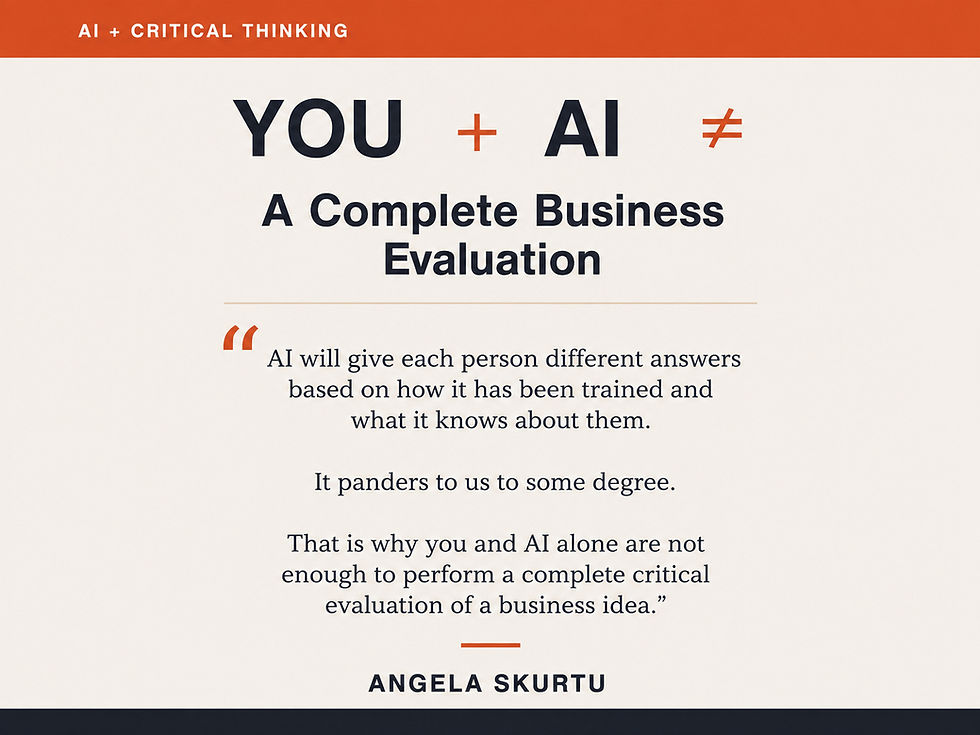
Emotional Intelligence and Critical Thinking Matter
To me, emotional intelligence means recognizing your thoughts and feelings without allowing them to make every decision for you.
You might feel excited about AI. You might distrust it. You might love sex. You might feel anxious about it.
Those emotions are real and deserve attention.
But your actions are a separate choice.
You can acknowledge your emotions while still making thoughtful decisions about your behavior.
You can ask yourself:
Where does this tool fit my values?
What are the potential benefits?
What are the potential risks?
What safeguards should I put in place?
Where are my boundaries?
Those are the questions that lead to better outcomes.
Risk Is Part of Every Meaningful Decision
Every meaningful part of life involves risk.
Driving a car carries risk.
Starting a business carries risk.
Falling in love carries risk.
Having sex carries risk.
Using AI carries risk.
There is no perfect decision that eliminates uncertainty. So instead of chasing certainty, I prefer to teach risk analysis.
Making Informed Choices With AI and Sex
With AI, that might mean deciding which parts of your business you're comfortable using it for and which decisions should always remain human.
It means protecting confidential information, verifying important facts, and understanding AI's limitations.
With sex, it means deciding what aligns with your values, practicing consent, protecting yourself from sexually transmitted infections, communicating openly with partners, and making informed decisions about the experiences you choose to explore.
The principle is exactly the same.
Replacing Fear With Education
When we replace fear with education, silence with conversation, and judgment with curiosity, people become better decision-makers.
Whether the topic is sex, AI, or whatever society decides to fear next, my approach won't change.
I'll continue helping people think critically, understand the risks, honor their values, and make conscious decisions instead of reactive ones.
Because the goal has never been to tell people what to think.
The goal has always been to teach them how to think.


